24 October 2026
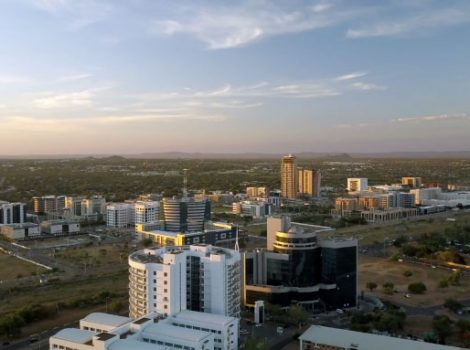
A five-judge panel of the Botswana High Court has heard two days of arguments in a landmark case brought by two women seeking the right to marry.
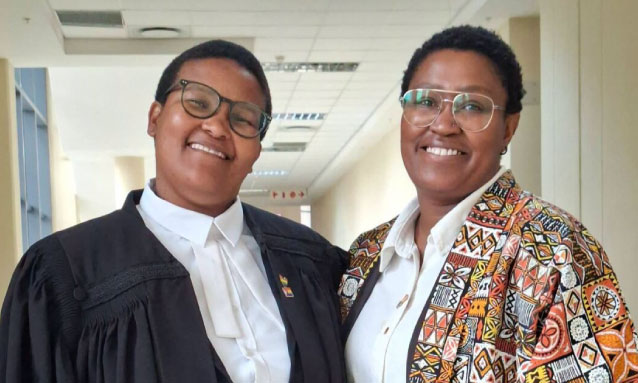
Supporters of the couple, Bonolo Selelo and Tsholofelo Kumile, as well as opponents of marriage equality, attended the hearings in Gaborone on 22 and 23 October.
Couple challenges Botswana’s refusal to recognise same-sex marriage
Selelo and Kumile, together with LGBTQ+ rights organisation LEGABIBO, are challenging the constitutionality of Botswana’s refusal to recognise their relationship through civil same-sex marriage. Marriage equality supporters gathered outside the court carrying rainbow flags and placards proclaiming “Love does not harm” and “marriage 4 all”. Opponents from Christian groups held signs stating “we say no to homosexuality” and “Mosadi le mosadi nyaa” (a woman and another woman — no).
The couple argue that the state’s refusal to allow them to marry violates their rights to dignity, equality, non-discrimination, privacy and autonomy, as well as freedom of expression and association.
LEGABIBO highlights consequences of exclusion
In May 2025, the Department of Civil and Registration refused to register the women’s marriage, sparking the legal challenge.
“Exclusion is not symbolic; it denies practical legal protection,” said LEGABIBO in a Facebook statement.
The organisation highlighted how denying recognition to same-sex unions affects property and inheritance rights, medical decision-making, spousal maintenance, taxation, social security benefits, and the legal security and stability of children in same-sex households.
Government and religious groups oppose marriage equality
The state argues that marriage serves the purpose of procreation and that same-sex marriage conflicts with Botswana’s culture and traditions and violates religious freedom. It also maintains that lawmakers, rather than the courts, should decide whether to introduce marriage equality.
LEGABIBO reported that the respondents — the government, the Botswana House of Prayer and Transformation, the Dingwetsi Association and the Evangelical Fellowship of Botswana — based much of their arguments on Christian doctrine. The Southern Africa Litigation Centre (SALC), which is supporting LEGABIBO in the case, highlighted the broader implications of the legal challenge.
“The matter is not only about challenging the administration and the Marriage Act at its core, but this case is about whether the State can treat one group of adult citizens differently because of the sex of the person they love and want to marry and then argue that this does not affect their constitutional rights.”
Ruling could make Botswana Africa’s second country to legalise same-sex marriage
The court is set to deliver its judgment in the case on 2 April 2027. If the court rules in favour of Selelo and Kumile, Botswana could become the second African country to legalise same-sex marriage, after South Africa did so in 2006.
“As we await the court’s decision, our work continues,” said LEGABIBO.
“We will keep educating ourselves, sharing knowledge, challenging harmful narratives and advocating for a future where dignity, equality and justice are not conditional on who we love.
By LUIZ DE BARROS
Source: https://www.mambaonline.com/botswana-same-sex-marriage-case-hearings-court-ruling-expected-in-2027