19 October 2025
The 2026 Race for Rhinos, which will be held in Botswana’s famous Makgadikgadi Salt Pans, is a multifaceted event that aims to promote responsible tourism and raise awareness of the value of rhino conservation. Originally conceived by former President Ian Khama, the initiative seeks to increase public awareness of the persistent threats that poaching and habitat loss pose to rhinos.
In order to ensure the survival of these iconic animals, it also aims to demonstrate the effectiveness of cooperation between conservationists, local communities, and tourists.
The event’s purpose: Combining tourism with conservation
The Race for Rhinos is not just a race; it is an opportunity to engage global audiences in the battle to protect wildlife and promote the sustainable tourism industry. The race will take place against the backdrop of the Makgadikgadi Salt Pans, an area celebrated for its dramatic landscapes and rich biodiversity. While the race itself is the centrepiece, its broader goal is to position this ecologically significant region as a premier destination for ecotourism, which will bring long-term benefits to both conservation and local communities.
Preparatory work for the 2026 event is already underway, with the Botswana Tourism Organisation (BTO) partnering with various stakeholders, including Avis Botswana, which has donated a Toyota Hilux for a two-month road-mapping exercise. The mapping will focus on identifying key tourist routes, campsites, heritage sites, cultural stops, game parks, and airstrips. These efforts are designed to create a comprehensive safari experience for visitors while ensuring that local communities benefit economically from the influx of tourists.
Sustainable Tourism: Creating a win-win situation for wildlife and locals
The success of the Race for Rhinos depends on the careful integration of tourism and conservation. It is not enough to simply host a race; tourism must contribute positively to the protection of wildlife and the development of local communities. The event’s organisers are focusing on creating a model for tourism that supports both the environment and the people who live in close proximity to the animals.
As Tebogo Morake from the Botswana Tourism Organisation highlighted, the event exemplifies how tourism and conservation can work in tandem. The goal is to encourage responsible engagement with Botswana’s natural heritage while also generating economic opportunities for the local population. By creating sustainable tourism activities, local communities will not only have a stake in conservation efforts but will also directly benefit from the event’s success.
The role of air access and logistics
Logistical considerations are also central to the event’s planning. The Makgadikgadi Salt Pans are remote, and air access will be a key component in connecting tourists and participants to the area. To ensure a smooth and meaningful experience for all involved, airstrips and safari trails are being carefully mapped out. Every detail, from transportation to safety protocols, is being considered to support a sustainable and impactful event.
Former President Khama emphasised that logistics play a vital role in creating a safe, enjoyable, and sustainable tourism experience. The proper planning of airstrips, tourist routes, and accommodations will ensure that visitors have access to remote areas of the salt pans while maintaining a low environmental impact.
Community engagement: Empowering local populations
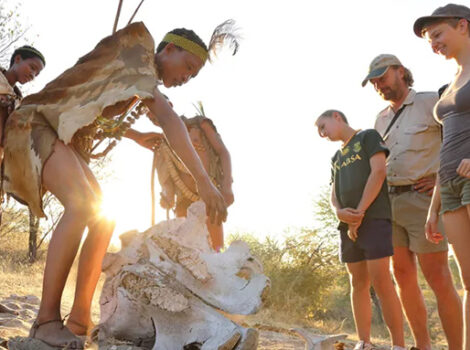
At the heart of the Race for Rhinos initiative is community engagement. By actively involving residents in conservation awareness, cultural experiences, and tourism activities, the project seeks to create a sense of ownership and responsibility among local populations. The organisers recognise that conservation efforts are most effective when local communities are directly involved.
The event is designed to offer local residents opportunities to showcase their cultural heritage while also teaching them about the importance of wildlife protection. This collaboration fosters a stronger connection between communities and the environment, ensuring that conservation efforts will endure for generations to come.
A shared responsibility: The role of international and local stakeholders
As Botswana prepares for the 2026 Race for Rhinos, there is growing excitement across conservation and tourism sectors. This event is not just a race; it is an opportunity to unite both local and international stakeholders in the shared mission of protecting rhinos and promoting eco-tourism.
The event’s theme for 2026, Our Shared Earth, Our Shared Future, underscores the interconnectedness of environmental stewardship and community involvement.
It calls on everyone—governments, conservationists, businesses, tourists, and local communities—to work together to ensure a sustainable future for wildlife and tourism.
Ensuring the endurance of Botswana’s natural heritage
In conclusion, Botswana’s Race for Rhinos initiative looks to be a big event that offers a lot more than just a sporting competition. It serves as a venue for advancing community development, sustainable tourism, and wildlife protection. The race will leave a lasting legacy that will benefit the local economy and conservation in the long run.
The Race for Rhinos will help ensure the future of Botswana’s natural heritage while also increasing awareness of rhino conservation through cooperation, meticulous planning, and responsible tourism practices. “Every step we take together ensures that Botswana’s natural heritage endures for generations to come,” as former President Khama so eloquently stated.
A call to action for everyone concerned with sustainable tourism and wildlife conservation is the 2026 Race for Rhinos. We can guarantee that future generations will be able to appreciate the beauty of rhinos and the environments they live in by supporting such initiatives.
Source: https://shorturl.at/rO132