8 September 2026
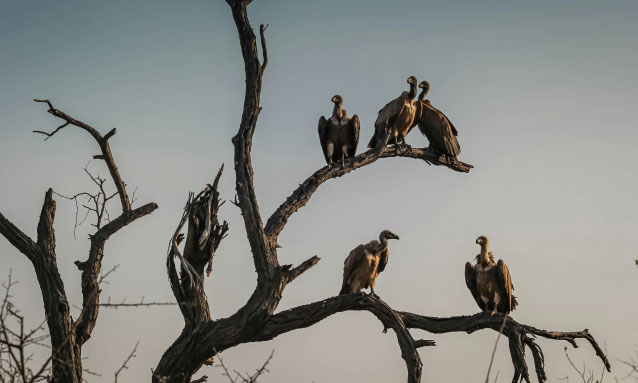
Conservation organisations from six Southern African countries have launched the Vulture Safe Zone Alliance (VSZA) and the Vulture Safe Zone (VSZ) Guidelines, which is an important step towards protecting vultures in the region, says nongovernmental conservation organisation the Endangered Wildlife Trust (EWT).
The VSZA defines VVSZs as areas not only within but also outside of formal protected areas where land users, communities, conservation organisations, government agencies and other stakeholders work together to identify, address and reduce threats, thus creating safer environments for vultures.
These landscapes include communal areas, private land, conservancies, agricultural areas and other managed landscapes that are important for vulture feeding, breeding and movement. Because vultures routinely travel hundreds of kilometres in search of food and regularly cross international borders, conservation efforts in one country can only be effective if supported by similar actions in neighbouring countries, the EWT says.
Currently, VSZs cover more than two-million hectares of land in Southern Africa, it notes. The VSZA aims to strengthen the viability of VSZs by linking safe spaces across landscapes, and creating a new phase in regional collaboration for vulture conservation.
Furthermore, the newly launched VSZ Guidelines, developed as a collaborative effort between nine conservation organisations, provide a common framework for identifying, establishing and monitoring these areas.
The guidelines will support partners and stakeholders in reducing threats, improving awareness and promoting actions that allow vultures to safely move, feed and breed across landscapes, the trust says.
The VSZ Alliance brings together nine conservation organisations, namely BirdLife International and its partners, including BirdLife Botswana, BirdLife South Africa, BirdWatch Zambia, BirdLife Zimbabwe, Nature Tanzania, Wildlife and Environmental Society of Malawi, as well as Raptors Botswana and the EWT.
These organisations will work to strengthen collaboration, share knowledge and promote aligned practical approaches for establishing and managing VSZs across Southern Africa.
Six of Africa’s 11 vulture species are classified as endangered or critically endangered on the International Union for Conservation of Nature Red List, highlighting the urgent need for coordinated conservation action across the continent. Vultures are essential for maintaining ecological balance by scavenging on decaying carcasses, and have experienced alarming declines, with African vulture populations having plummeted by between 80% and 97% over the past five decades.
These declines are driven by intentional and unintentional poisoning linked to belief-based use, poisoning of mega herbivores and human-wildlife conflict respectively, and collisions and electrocutions with infrastructure, such as powerlines and habitat loss, among others. The Alliance aims to strengthen the viability of VSZs, which are a crucial yet often overlooked tool that complements and supports other conservation efforts. Vultures do not distinguish between protected or unprotected land, and neither should our conservation efforts, says the EWT Birds of Prey field officer Danielle du Toit.
“VSZs provide a practical way for conservation organisations to work with land users across these landscapes to reduce threats and create safer spaces for vultures. The establishment of the VSZ Alliance marks an important step towards making this approach more connected and effective across Southern Africa.
“It is the collaboration and shared goal between various stakeholders, including land users, that will result in impactful and sustainable conservation of these critically important species,” she says.
“Vultures do not recognise borders and neither should conservation efforts,” says BirdLife International Southern Africa senior vulture conservation officer Lovelater Sebele.
She adds that the VSZA brings together organisations across Southern Africa to turn this shared understanding into coordinated action on the ground.
“By connecting local action, sharing knowledge and promoting common approaches, the alliance will help create safer landscapes for vultures across the region and strengthen our collective response to the threats driving their decline,” she says.
Botswana is home to five vulture species. The country is in the centre of the Southern African Development Community States and has a lot of land designated for conservation of biodiversity, says Raptors Botswana Grants and Strategic Engagements director Moses Selebatso.
“However, protected areas alone cannot provide the security that vultures need across the landscapes they use.
The establishment of VSZ outside of the protected areas and regular education and awareness engagement will be instrumental in saving these vultures in the region,” he says.
Separately, South Africa‘s Department of Forestry, Fisheries and the Environment (DFFE) celebrated International Vulture Awareness Day on September 5. The department points to the critical ecological role played by vultures and calls for collective action to secure the future of these threatened species.
Vultures play a vital role in maintaining healthy ecosystems by rapidly removing animal carcasses and helping to prevent the spread of disease. South Africa is home to nine vulture species, seven of which breed within the country, it says.
However, many of these species remain threatened by poisoning, collisions and electrocutions from energy infrastructure, habitat loss and illegal harvesting for trade and traditional medicine.
The DFFE calls on all South Africans to support vulture conservation by reporting poisoning incidents, promoting environmental stewardship and raising awareness of the critical role vultures play in maintaining healthy ecosystems.
Additionally, South Africa continues to implement the National Multi-Species Vulture Biodiversity Management Plan (BMP) published in 2024, which provides a national framework for addressing key threats, strengthening partnerships, improving scientific knowledge and supporting the recovery and long-term conservation of vultures. Implementation of the BMP is coordinated through the National Vulture Task Force, which brings together government, conservation organisations, researchers and the private sector.
South Africa’s vulture conservation efforts are further strengthened through partnerships with local communities and organisations, such as the EWT, BirdLife South Africa, VulPro, Wildlife ACT, SANBI, Eskom and provincial conservation authorities.
These partnerships play a significant role in wildlife poisoning prevention and response, monitoring programmes, awareness raising and strengthening national capacity to combat poisoning incidents, the department says.
Source: https://shorturl.at/rGGwW
By: Schalk Burger