11 August 2026
What do African countries and Dubai in the United Arab Emirates (U.A.E.) have in common? Diamonds, commodities, and now, for the first time, a sister trading hub linking the two.
Botswana’s reliance on diamonds, responsible for over 80% of its exports but now a shadow of its former self (in value) amid the rising popularity of lab-grown stones, has shown why monolithic trade is synonymous with economic vulnerability.
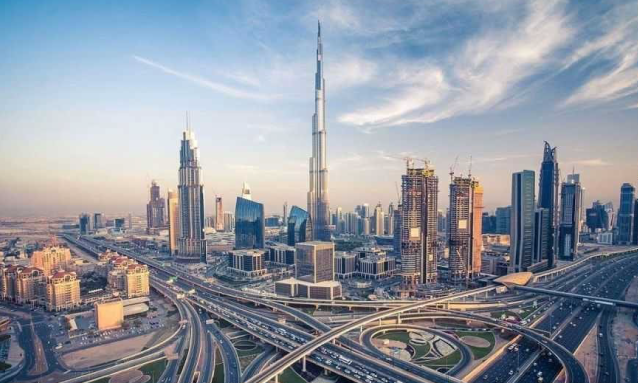
Hopes of steadying the ship have seemingly been boosted after the Botswana Mercantile Exchange, a 100% subsidiary of the Botswana Stock Exchange (BSE), signed a Memorandum of Understanding (MoU) with the U.A.E.’s Dubai Multi Commodities Centre (DMCC), which houses over 26,000 member companies across 180 countries.
It’s the sort of reach that could invigorate local businesses, and a Gulf intersection that aligns with President Duma Boko’s True North strategy, centred around trade diversification, employment, and achieving high-income status.
This comes as Botswana looks to maximise previously untapped markets, including manufacturing, agriculture, tourism, infrastructure, and finance, Aupa Monyatsi, CEO of the BSE, confirms to FORBES AFRICA.
He envisions the Botswana Mercantile Exchange, through its affiliation with the DMCC, becoming a “regional exchange that aggregates commodities from neighbouring countries to create scale and better market access.”
Though this deal remains in the development stage, the prospect of operating directly through Dubai’s global marketplace, thus cutting out the middlemen, would undoubtedly bolster Botswana’s ability to retain a greater share of profits.
Providing clarity into what goods will become available at the Dubai-rooted hub, Ahmed Bin Sulayem, Executive Chairman and CEO of the DMCC, tells FORBES AFRICA that the MoU is “deliberately” commodity-agnostic and flexible.
“Botswana will determine its own economic and export priorities, and the framework is built to accommodate those priorities rather than presume them… Whichever sectors lead over the next decade, the infrastructure is already in place to support them,” Sulayem says, alluding to the level of rawness across Botswana’s emerging markets, meaning only time will tell which prosper the most.
Buyers at the DMCC will have a selection of hard and soft commodities from Botswana, the former relating to diamond, copper, coal, and soda ash, while the latter includes the likes of beef, maize, and traditional herbs. Adding a modern component to the deal is that carbon credits and virtual assets will also be made available.
Looking ahead, more critical minerals are expected to come to fruition. In early July, the country’s Minister of Minerals and Energy, Bogolo Joy Kenewendo, announced the department’s goal of increasing non-diamond mineral exploration expenditure to roughly $11 million by 2029.
For the time being, diamonds remain at the forefront of Botswana’s offerings, and the DMCC is positioning itself to maximise their output with plans of onboarding the state-owned Okavango Diamond Company with its in-house diamond tenders.
Sulayem reminds us that, while economic diversification is necessary for Botswana, “Diamonds will remain a cornerstone of this relationship… the clearest near-term opportunities lie in building greater value around strengths Botswana already has.”
Source: https://shorturl.at/jVEom