31 May 2026
- Botswana’s K.Hill project deemed economically viable, paving way for first manganese mine
- Mine could produce battery-grade manganese materials over a 25-year lifespan
- Project supports Botswana’s diversification beyond diamonds but still requires financing
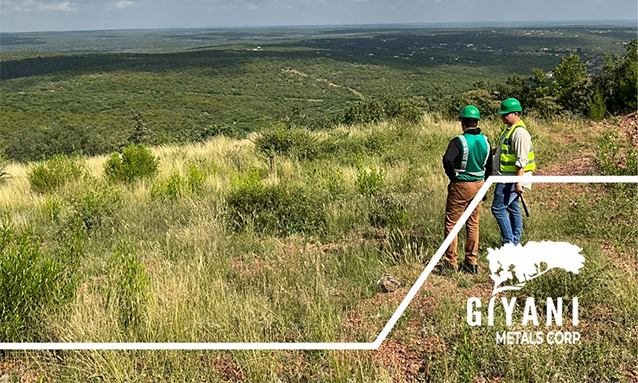
Canadian mining company Giyani Metals released the definitive feasibility study (DFS) for its K.Hill manganese project in Botswana on Thursday, May 28. The document confirms the economic viability of what would be a 25-year mining operation, clearing the way for construction and positioning Botswana as an emerging producer of a metal that is becoming increasingly important to the energy transition.
Strengthening Africa’s dominance in manganese supply
A silver-grey metal indispensable to steelmaking, which absorbs more than 90% of global demand, manganese is also carving out a growing role in battery materials.
Global production stood at 20 million tonnes in 2025, according to the U.S. Geological Survey (USGS), with supply heavily concentrated on the African continent. South Africa, Gabon and Ghana alone accounted for 14.6 million tonnes, dominating global output.
Côte d’Ivoire rounds out the African picture, though at considerably smaller volumes. Botswana is now poised to join this group with K.Hill, which would be the country’s first-ever manganese mine.
According to the study, the project is expected to yield 1.5 million tonnes of high-purity manganese sulphate monohydrate (HPMSM) and 99,000 tonnes of high-purity manganese oxide (HPMO) over its operational life. The initial capital outlay is pegged at $535 million, with an after-tax net present value (NPV) of $481.5 million and an internal rate of return (IRR) of 20.3%.
Economic diversification meets a growing market
Beyond adding a new source of manganese supply in Africa, K.Hill fits squarely into Botswana’s broader push to diversify an economy still overwhelmingly reliant on diamonds. The risks of that dependence have become more visible in recent years.
Persistent weakness in the diamond market contributed to a GDP contraction of 2.8% in 2024. Historically, the diamond sector accounts for roughly 70% of the country’s exports, close to a third of budget revenues and around a quarter of GDP.
K.Hill’s market focus could help differentiate it from existing African manganese producers. Unlike most of the continent’s current manganese output, which is largely directed at the steel industry, Giyani Metals intends to channel the entire production from the Botswana site towards the battery market. HPMSM and HPMO are considered key precursor materials in the battery chemistry underpinning supply chains for electric vehicles (EVs) and energy storage systems tied to renewable power.
Through this strategy, the company is seeking to tap a fast-growing niche driven by Western nations’ determination to secure new supply sources and reduce their dependence on China. While China’s share of primary manganese production is relatively modest, it controls an estimated 95% of global manganese refining capacity. The outlook is further supported by expectations of a supply shortfall in battery-grade manganese by 2029, according to Giyani, citing independent market analysis commissioned from SC Insights and Fastmarkets.
“These results demonstrate strong economic returns and confirm K.Hill’s position as a unique mine-to-market supplier of battery-grade manganese products, capable of meeting growing demand from Western markets and providing a solid foundation for further optimisation and continued development of the project,” said Nigel Robinson, interim executive chairman of Giyani Metals, adding that the DFS represented a significant milestone for the project.
Construction still awaits financing
Before Botswana can join the ranks of African manganese producers and capture the expected economic benefits, K.Hill must clear several remaining hurdles. Chief among them is securing the financing needed to build the mine. Giyani Metals has yet to provide specifics on that front or indicate a timeline for the start of construction, even though the mining licence was already granted by Gaborone in September 2024.
Last year, the U.S. Export-Import Bank (EXIM) issued a letter of intent for $225 million in financing, though no binding agreement has since materialised. In the meantime, Botswana’s broader mining diversification agenda continues to advance, driven by a growing copper sector, alongside earlier-stage nickel projects, including Selkirk and Selebi, and uranium development at Letlhakane.
Source: https://shorturl.at/gNWls