26 August 2026
- Agriculture contributes about 2% of GDP, with the government targeting 6% as part of its diversification strategy
- Horticultural projects in Kweneng rose to 430 from 253 during the same period a year earlier
- Botswana’s horticultural import bill fell from P634 million in 2018 to P182 million in 2023
Botswana is expanding support for commercial agriculture as the government seeks to increase domestic food production and reduce the economy’s reliance on mining. Lands and Agriculture Minister Edwin Dikoloti said on August 25 that greater investment in irrigation, mechanisation, climate-smart agriculture, digital technologies and innovation would be needed to raise agriculture’s contribution to the economy. The sector currently accounts for about 2% of GDP, while the government has set a target of 6%.
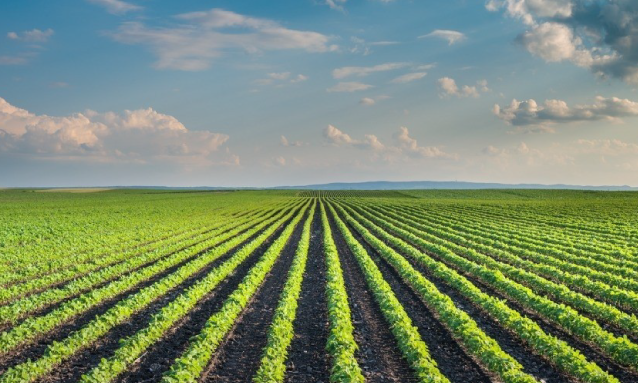
The expansion is already visible in horticulture. In Kweneng District, the number of horticultural projects increased to 430, including 420 operational projects, from 253 projects, of which 244 were operational, during the same period a year earlier, according to figures presented by the Ministry of Lands and Agriculture. Farmers produced about 1,697 tons of vegetables across 204.69 hectares.
National horticultural output has also increased. Government data show that Botswana produced 140,881 tons of horticultural products between April 2025 and January 2026, including 114,080 tons of vegetables.
The government has nevertheless identified water scarcity, climate variability, high input costs, storage constraints and limited processing capacity as factors affecting the consistency of domestic supply.
The government has used import restrictions alongside production measures to increase the share of the domestic market supplied by local horticultural producers. Botswana’s horticultural import bill declined from P634 million in 2018 to P182 million in 2023, according to government data. The government has attributed much of the decline to increased domestic production and restrictions introduced from 2022 on selected horticultural imports, while also acknowledging supply constraints affecting the availability of some locally produced commodities.
The government is also directing financial support towards commercially oriented agricultural projects.
Under the Impact Accelerator Subsidy Programme, 319 projects have been funded, of which 305 are operational, creating 363 employment opportunities, according to figures presented by the ministry.
Botswana’s agricultural strategy combines production support with measures aimed at improving the commercial viability of farming. The government is betting on irrigation, mechanisation, climate-smart practices, technology and agricultural infrastructure to increase domestic production and raise agriculture’s contribution to GDP toward its 6% target.
Source: https://shorturl.at/Q59fv