7 September 2026
- Botswana President Duma Boko has held back-to-back meetings with Aliko Dangote and Mohammed Dewji as Gaborone seeks to attract more private investment from major African conglomerates.
- Dangote Group and MeTL are both expanding regionally, with recent multibillion-dollar or multimillion-dollar projects in markets including Ethiopia, Kenya and Mozambique.
- Botswana’s investment push comes as weak diamond demand exposes the limits of its traditional growth model, increasing pressure to diversify into sectors such as manufacturing, agriculture, services, tourism and infrastructure.
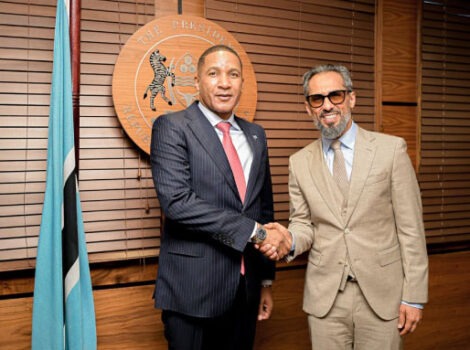
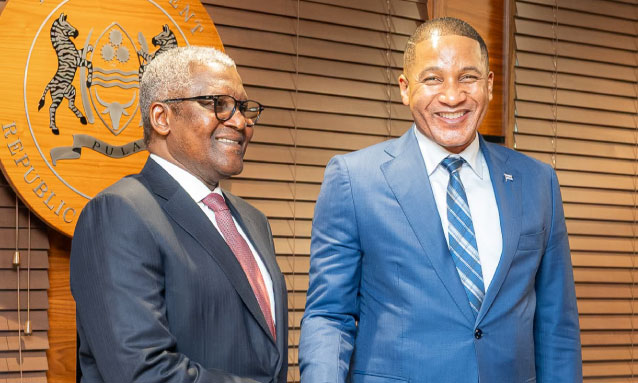
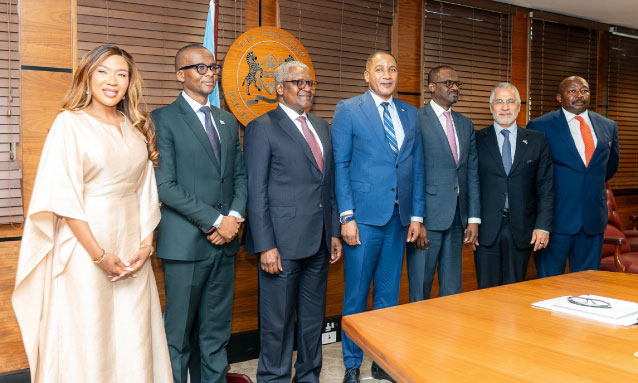
Botswana President Duma Boko received Aliko Dangote, founder and president of Dangote Industries Limited, in Gaborone last Wednesday, September 2. The meeting focused on large-scale investment opportunities and the potential involvement of the Nigerian conglomerate in major projects in Botswana.
Just over a week earlier, on Tuesday, August 25, Boko had received Mohammed Dewji, the Tanzanian businessman who heads conglomerate MeTL Group. That meeting also focused on investment opportunities in Botswana, including potential investments through the Botswana Stock Exchange and across several sectors of the economy.
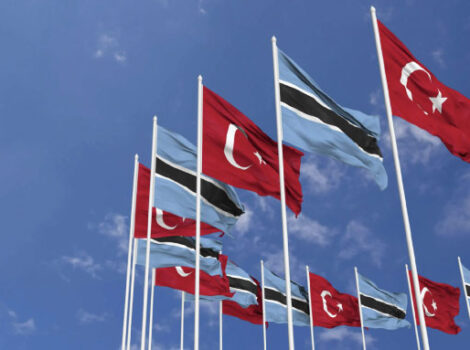
The two meetings underscore Gaborone’s efforts to attract more private investment and draw African conglomerates with capital, industrial experience and an established regional presence.
Two conglomerates with significant footprints across Africa
The two companies Botswana is seeking to attract share several characteristics: both are diversified conglomerates with operations across multiple African markets.
Dangote Group is active in sectors including cement, refining and petrochemicals, fertilisers and agriculture, with industrial operations in several African countries. In 2026, the Nigerian group continued to pursue expansion outside its home market. In May, Dangote said investment in its fertiliser complex in Ethiopia had increased to more than $4 billion, from the $2.5 billion announced in 2025. The increase reflects an expansion of the project’s scope beyond the planned urea plant.
Its most ambitious project announced this year is in Kenya. Dangote plans to develop a 700,000-barrel-per-day oil refinery in Lamu. The location was confirmed in July by Edwin Devakumar, vice president for oil and gas at Dangote Industries Limited. If completed, the project would become Dangote’s largest refining investment outside Nigeria and could significantly expand fuel-processing capacity in East Africa.
MeTL Group, led by Mohammed Dewji, operates across agriculture, manufacturing, food processing, edible oils, beverages, textiles, soaps and detergents, energy and petroleum products. The group is also active in logistics, global trading and business services. It has branches in several African countries, including Kenya, Uganda, Malawi, Zambia, Mozambique and the Democratic Republic of Congo.
MeTL has also accelerated its regional expansion in 2026. In May, the company announced plans to invest about $50 million in a soft drinks plant in Mombasa, its first major industrial investment in Kenya. Construction is expected to begin within a year, subject to regulatory approvals and final feasibility work.
A few months later, Dewji committed $250 million to investments in Mozambique after meeting President Daniel Chapo in Maputo on August 18. He said the group would seek to create up to 20,000 jobs, although MeTL did not specify the sectors that would receive the investment or provide an implementation timeline.
Botswana seeks to diversify its economy beyond diamonds
The investment push comes as Botswana’s diamond-dependent growth model faces increasing strain. For decades, the country has relied heavily on the diamond industry to generate exports, government revenue and economic growth.
The World Bank currently describes Botswana’s economy as highly dependent on diamonds, which account for more than 90% of export earnings. That dependence leaves the country particularly vulnerable to prolonged weakness in the global diamond market.
Recent weakness in diamond demand has weighed heavily on the economy. In its first Botswana Economic Update, published in July, the World Bank said GDP contracted by 2.8% in 2024 and by a further 0.7% in 2025, reflecting weaker diamond revenues, growing fiscal pressures and limited progress on diversification.
The institution said Botswana needs to accelerate reforms aimed at diversifying the economy and strengthening private-sector growth.
Botswana’s diversification drive predates the current diamond downturn. Authorities have long sought to develop new sources of growth and give the private sector a larger role in the economy.
That strategy is now reflected in the Botswana Economic Transformation Programme, or BETP, which is designed to shift the country away from its dependence on diamonds toward a more diversified, export-oriented and private-sector-led economy.
Priority areas include agriculture, manufacturing, financial services and digitalization, infrastructure, tourism, energy and mining.
The government says 186 projects and initiatives have been identified under the programme, with around 60% expected to be private-sector-led. Botswana’s 2026/27 budget also places private investment at the center of the country’s economic transformation strategy.
The question now is whether Gaborone’s discussions with major African investors will translate into concrete projects. So far, neither Dangote nor MeTL has announced a specific investment amount for Botswana following their meetings with President Boko.
Source: https://shorturl.at/pKPRG