9 June 2026
Key figures and thinkers have defined agriculture as the most noble and essential human pursuit, emphasising that it is the foundation of civilisation, the dignity of labour, the significance of soil stewardship and the necessity of feeding the world.
According to Sir Arthur Keith, a prominent Scottish anatomist and physical anthropologist, the discovery of agriculture was the first big step towards a civilised life.
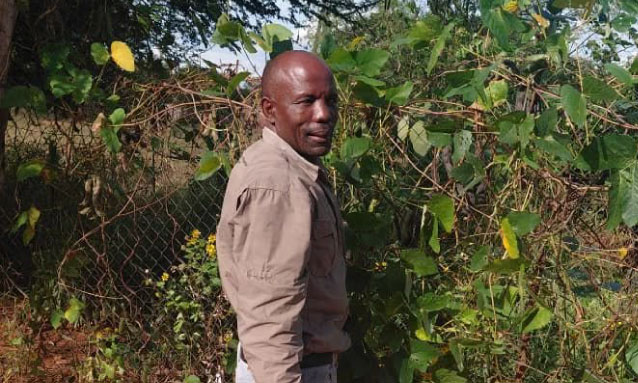
For Benjamin Phole, a smallholder coffee farmer operating near Serule in the Central District, a farmer’s work is never truly done. With a deep commitment to farming, he believes in making hay while the sun shines, focusing on seizing the right moment for agricultural tasks.
Tjikale Farm, a unique agricultural venture nestled in the thick, dense forest along the Serule-Tshimoyapula road, strives to scale coffee production within the country. Speaking in a recent interview with BOPA, Phole stated that he is carving out a niche market in coffee production to meet the unique and specific needs of his clients.
He produces velvet bean coffee, a natural, organic and caffeine-free alternative derived from Mucuna pruriens seeds. Phole spoke highly of the coffee, which produces a sweet aroma and boosts the immune system.
“It also improves mood, sleep quality and helps manage blood sugar levels and cures nerve disorders,’ he said.
In addition, he said the coffee is not only used for various medicinal purposes but also harnesses byproducts such as high-value organic pesticides and fodder. Phole crushes the coffee beans into a powder, which he then turns into caffeine-free, in-demand coffee. His coffee business complements his livestock production, with the two enterprises sharing a symbiotic relationship that drives mutual growth.
“Integrating a coffee business with livestock production creates a powerful, mutually beneficial symbiotic relationship, often termed a mixed-farming system.
This approach creates a closed-loop system where waste from one enterprise becomes a valuable resource for the other, enhancing overall productivity and sustainability,” saidPhole.
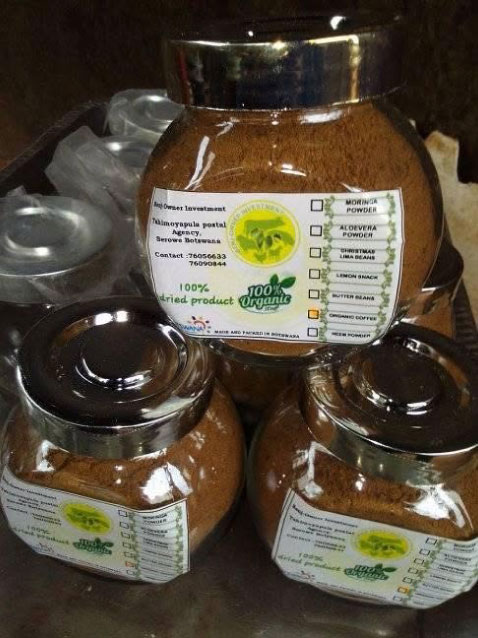
The energetic Phole says he has acquired a Trade mark from the Companies and Intellectual Property Authority (CIPA) under the name OnnaBen Natural Products to improve the saleability and marketability of his products.
Phole said such a move would protect his product’s unique identity, thus allowing consumers to distinguish his coffee from varieties that contain caffeine. He also said he was working with the Local Enterprise Authority (LEA) gain access to local shops throughout the country.
The product is available in Serowe and Tshimoyapula, and he currently uses social media platforms such as Facebook and WhatsApp to market the coffee. Phole explained that he operates a distribution hub in Serowe, from which he couriers the product nationwide.
Phole stated that he expects a harvest of 80 bags of coffee, each weighing 50 kilograms, totalling 4 000 kilograms for the current season and is looking to acquire more acreage for mass production.
He says the coffee business is profitable and with the proceeds, he’s able to put food on the table, pay for his children’s school fees and transport and fund various farming activities.
Furthermore, he said the coffee business is doing well on the market due to its uniqueness, noting that the National Agricultural Research and Development Institute (NARDI) experts recently visited his farm to conduct research with a view to establishing a barcode for the product.
Phole said his aspiration to sell the product to supermarkets and pharmacies drove the need to secure a barcode to enhance business efficiency, speed, and inventory management accuracy and checkout processes, moving away from slow, error-prone manual data entry.
The research by NARDI would also ensure that both consumption safety measures and standards are met, he said emphatically, highlighting he always strives for quality assurance to protect the reputation and goodwill of the business.
Source: This story was published by BOPA on 23 April 2026
Read the original article on Botswana Daily News.