
29 September 2026
- President Daniel Chapo landed in Gaborone for a three-day State Visit to Botswana this Monday, 28 September, and will participate as Guest of Honour in celebrations marking the country’s 60th anniversary of independence;
- Botswana is seeking to expand its access to the Indian Ocean through Mozambique’s port and logistics infrastructure, including Maputo, Nacala and the Ponta Techobanine project;
- The 9th Botswana–Mozambique Joint Permanent Commission on Cooperation (JPCC), held in Gaborone last week, discussed transforming the bilateral mechanism into a Binational Commission and reviewed 18 draft agreements and memoranda;
- Ponta Techobanine and the Limpopo Development Corridor remain among the projects that the two countries intend to accelerate;
- Botswana recorded imports of 7.28 billion pula and exports of 4.95 billion pula in June, a trade deficit of 2.33 billion pula;
- Greater use of Mozambican corridors by Botswana could increase cargo volumes, logistics revenues and demand for rail, port, storage and fuel-supply services in Mozambique.
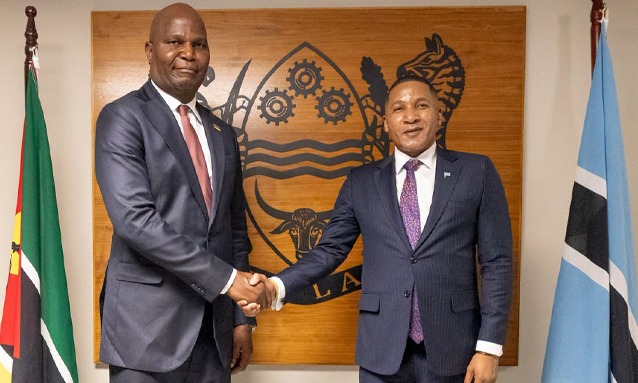
President Daniel Chapo began a three-day State Visit to Botswana this Monday, 28 September, at the invitation of President Duma Boko, at a time when the two countries are seeking to accelerate transport, logistics and trade projects and turn bilateral agreements into concrete economic operations.
According to the Presidency of the Republic, Chapo will participate as Guest of Honour in celebrations marking the 60th anniversary of Botswana’s independence and will hold talks with Botswana authorities on matters of bilateral and regional interest.
The visit comes just days after the 9th Botswana–Mozambique Joint Permanent Commission on Cooperation (JPCC) was held in Gaborone, placing the implementation of existing commitments, the Limpopo Development Corridor and Ponta Techobanine among the priority issues.
The two economies have characteristics that create scope for complementarity. Botswana is a landlocked country, a mineral producer and dependent on external corridors to reach international markets. Mozambique has an extensive Indian Ocean coastline, ports, railway systems and corridors serving several Southern African countries.
This combination is making transport and logistics one of the central components of the bilateral economic relationship.
9th Joint Permanent Commission on Cooperation puts implementation at the centre of the agenda
The 9th Joint Permanent Commission on Cooperation, held in Gaborone on 23 September, prepared part of the agenda ahead of Daniel Chapo’s visit. According to official information from Botswana, the two countries discussed the possibility of upgrading the current Joint Permanent Commission on Cooperation to a Binational Commission, creating a higher-level political and institutional structure to oversee strategic and economic cooperation. The meeting also reviewed 18 draft agreements and memoranda of understanding in areas including trade, science and technology, tourism, education, health, youth, housing, public administration, the media and other areas of cooperation.
The Director for Africa and the Middle East at Mozambique’s Ministry of Foreign Affairs and Cooperation, Hermenegildo Caetano, argued that bilateral work should focus on implementing instruments that have already been negotiated. On the Botswana side, the Permanent Secretary of the Ministry of International Relations, Thuso Ramodimoosi, also pointed to the need to identify implementation gaps, establish responsibilities and set timetables for outstanding commitments. The agenda therefore places project implementation at the centre of the current phase of relations between Maputo and Gaborone.
Botswana seeks access to the Indian Ocean through Mozambique
Botswana’s geographical position increases the costs associated with transporting its imports and exports and makes access to regional corridors a factor in its external competitiveness. Mozambique offers direct access to the Indian Ocean through different port systems.
During Duma Boko’s visit to Mozambique in March 2025, the Botswana President visited the ports of Nacala and Maputo and flew over the area earmarked for Ponta Techobanine. The authorities of the two countries also discussed the possibility of Botswana using Nacala, in addition to its existing links with Maputo and the projects associated with Techobanine.
For Botswana, an efficient link to the Indian Ocean allows it to diversify routes, reduce dependence on specific corridors and improve access to markets in Asia and the Middle East.
For Mozambique, additional cargo from Botswana could increase the use of ports and railways and generate demand for storage, road transport, customs services, fuel, maintenance and other activities associated with the logistics chain.
Ponta Techobanine returns to the bilateral agenda
The Ponta Techobanine project remains among the largest initiatives in economic cooperation between Botswana and Mozambique.
The initiative involves Botswana, Mozambique and Zimbabwe and envisages a railway link of approximately 1,700 kilometres to a deep-water port infrastructure on the Mozambican coast.
During Boko’s visit in 2025, official Botswana sources put the estimated investment in the project at around US$6.5 billion.
The 9th Joint Permanent Commission on Cooperation once again placed the project on the agenda. The authorities acknowledged that outstanding issues remain and called for greater coordination between Botswana, Mozambique and Zimbabwe to move ahead with implementation. The infrastructure was designed to handle heavy cargo, including minerals, and create a new link between the interior of Southern Africa and the Indian Ocean.
Its development will require financing, regulatory coordination between three jurisdictions, the definition of railway and port operating models, and sufficient cargo volumes to make the investment economically sustainable.
Limpopo Corridor also among priorities
Logistics cooperation is not focused exclusively on Techobanine. At last week’s meeting, the two delegations also called for the acceleration of work related to the Limpopo Development Corridor. The combined use of different corridors can reduce the concentration of cargo on a single route and increase regional logistics resilience.
Botswana already uses Mozambican infrastructure. In March 2025, Botswana Oil chief executive Meshack Tshekedi said goods from the country were being transported through the Port of Maputo and identified opportunities to export Botswana coal through the infrastructure. On the same occasion, the company identified Mozambican ports as potential channels for imports of petroleum products from the Middle East.
Botswana records 2.33 billion pula trade deficit
The search for new routes comes at a time of pressure on Botswana’s external trade. The latest official data published by Statistics Botswana show that, in June 2026, the country imported goods worth 7.28 billion pula and exported 4.95 billion pula. The result was a trade deficit of 2.33 billion pula.
The country’s trade structure remains strongly linked to Southern Africa and the mining industry. In October 2025, for example, South Africa accounted for 63.1% of Botswana’s imports, while Mozambique accounted for 2.6%.
Diversification of logistics routes can reduce transport costs and facilitate access to suppliers and buyers outside the region.
Botswana is also seeking to position itself as a regional transport and trade hub within the SADC and the African Continental Free Trade Area. The Botswana Government has linked investment in roads and corridors to its intention to serve a regional market of hundreds of millions of consumers.
Energy links ports, fuel and supply security
Energy is another economic pillar of closer ties between the two countries. During Duma Boko’s visit to Mozambique in March 2025, the agenda included the Maputo Thermal Power Station and discussions on opportunities for energy cooperation. Botswana authorities identified energy, transport, logistics and infrastructure among the priority areas of the bilateral relationship. Access to Mozambican ports could also support Botswana’s fuel-supply security.
Botswana Oil indicated during that visit that the development of Techobanine and other links with Mozambique could facilitate imports of petroleum products from the Middle East. This possibility links energy cooperation to transport infrastructure: port terminals, storage facilities, railway and road corridors and distribution systems become part of the same economic chain.
Mozambican ports could capture more regional cargo
The expansion of logistics ties with Botswana forms part of a broader economic strategy for Mozambique: increasing the volume of regional cargo moving through its corridors.
The country’s geographical position allows it to serve landlocked Southern African economies through the Maputo, Beira and Nacala corridors. Each additional tonne handled can generate revenue across different segments of the chain — rail, ports, road transport, storage, customs clearance, fuel supply, insurance and business services.
The actual economic benefit will be determined by the competitiveness of the routes. Transit times, railway and port tariffs, available capacity, border efficiency, customs predictability and the quality of land links all influence operators’ choice.
Botswana also has logistics alternatives through South Africa and Namibia. Mozambican corridors will therefore have to compete on cost, time and reliability to capture a growing share of Botswana’s cargo.
Mining could generate new flows through the corridors
Botswana’s productive structure creates a potential cargo base for export corridors. The country is a major mineral producer and is seeking to diversify its economy to reduce its dependence on diamonds. Coal and other minerals can generate volumes suitable for long-distance rail transport when export capacity exists and international prices are competitive.
During Boko’s visit to Mozambique in 2025, Botswana Oil specifically identified the possibility of using the Port of Maputo to export Botswana coal to international markets.
An efficient railway link between production areas and Mozambican ports could turn some of these resources into transit cargo for Mozambique.
This model is already an important component of the national corridor economy, which handles goods produced or consumed by neighbouring countries.
Tourism and air links could expand services
The bilateral agenda also includes tourism. The 9th Joint Permanent Commission on Cooperation included the sector among the areas covered by the cooperation instruments reviewed in Gaborone.
Botswana has an international tourism industry strongly associated with nature and conservation, while Mozambique has coastal and marine assets that allow complementary products to be developed.
The expansion of air links, the simplification of people’s movements and the integration of tourism operators could encourage regional circuits combining destinations in both countries.
The creation of these flows depends on air connectivity, visa facilitation, joint promotion and the ability of private operators to structure commercially competitive regional products.
State Visit finds 18 draft agreements and memoranda
Daniel Chapo’s visit begins with a bilateral agenda that has already been technically developed. The Joint Permanent Commission on Cooperation reviewed 18 draft agreements and memoranda of understanding and discussed mechanisms for monitoring the implementation of commitments made.
The Mozambican Presidency states that the visit aims to strengthen cooperation ties between the two countries and that Chapo will hold talks with Botswana authorities on matters of bilateral and regional interest. The delegation includes the First Lady, Gueta Selemane Chapo, members of the Government, members of the Assembly of the Republic and officials from the Presidency, the Ministry of Foreign Affairs and Cooperation and other State institutions.
The work carried out by the Joint Permanent Commission on Cooperation establishes a portfolio covering trade, infrastructure, tourism and other sectors. The discussion on creating a Binational Commission seeks to strengthen political oversight of this agenda.
Corridors turn geography into an economic asset
The relationship between Mozambique and Botswana rests on concrete geographical complementarity: Botswana needs competitive links to maritime markets, while Mozambique seeks to increase the volumes handled by its ports and corridors.
Maputo already plays a role in this relationship. Nacala provides an additional alternative. Ponta Techobanine represents a long-term project with the capacity to alter logistics flows between Botswana, Zimbabwe and the Mozambican coast.
Moving from agreements to commercial operations requires investment, financing, railway interoperability, border facilitation, port capacity and contracts guaranteeing regular cargo volumes.
Daniel Chapo’s visit to Gaborone comes after the two countries identified precisely these issues at the 9th Joint Permanent Commission on Cooperation. Progress on the corridors, trade and energy projects will provide concrete indicators for measuring the evolution of the bilateral economic relationship in the coming years.
Source: https://shorturl.at/HeSui