10 December 2025
A new chapter unfolds for Selibe Phikwe as the long-awaited Informal Sector Market Stalls are finally open. Speaking at the recent launch, Local Enterprise Authority (LEA) Caretaker CEO Thato Jensen revealed that although the project faced several challenges at the onset causing delays, it has now been successfully completed.
Jensen highlighted the crucial support from the Selibe Phikwe Town Council, noting that the Council injected P1 million at the start of the project, helping pave the way for its progress.
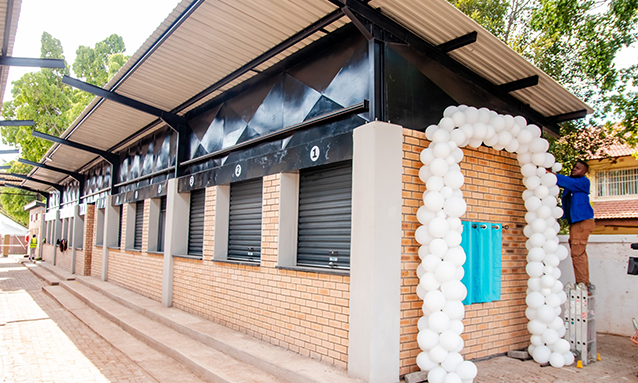
The entire development has now been completed at a total cost of P3.2 million. The new facility features 42 units, including an ablutions block, ensuring traders have a clean, safe, and fully functional environment to operate from. Jensen emphasised that this development is more than just infrastructure; it is a lifeline for the town’s economy, especially following the closure of the BCL mine nine years ago.
Jensen expressed confidence that the market stalls will contribute significantly to reviving economic activity by creating opportunities for informal traders, boosting local business, and stimulating community growth.
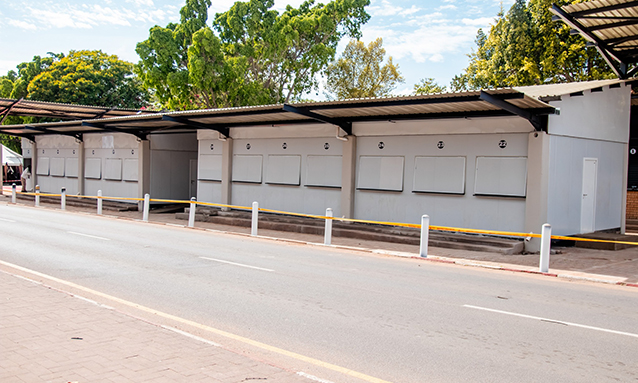
The Kutlwano Informal Sector Market Stalls being launched marked a significant milestone in the ongoing efforts of Government and LEA to strengthen and formalise the informal economy.
Officiating the event, the Minister of Trade and Entrepreneurship, Tiroeaone Ntsima, reflected on President Adv. Duma Boko’s recent engagement with informal sector associations, where the President underscored the sector’s vital contribution to livelihoods. He highlighted the need for improved infrastructure, financial inclusion, and enabling policies to ensure dignified and sustainable operations for informal traders.
The Minister reiterated that the Local Enterprise Authority (LEA) is scaling up its strategy to graduate informal businesses into the mainstream economy.
He noted that providing infrastructure such as the newly launched market stalls enhances decent work, improves productivity, and mitigates challenges caused by weather exposure, lack of storage, and the absence of basic amenities.
Jensen highlighted that following the closure of the BCL mine nine years ago, Selebi Phikwe experienced increased unemployment, pushing many, particularly women, into the informal sector. In response, LEA partnered with Selebi-Phikwe Town Council (SPTC), Selebi Phikwe Economic Diversification Unit (SPEDU), and other stakeholders to develop a facility that offers traders a dignified, structured, and service-ready working environment. Under the partnership, SPTC will oversee stall registration and facility upkeep to ensure long-term sustainability.
Jensen noted that the project aims to revitalise the Selebi Phikwe economy by creating an accessible, affordable “working market” aligned with the principles of ILO Recommendation 204 (2015). The facility is expected to attract new customer segments while consolidating informal traders who were previously dispersed across the town, often in conflict with municipal by-laws.
The new market offers an organised, aesthetically improved space designed to foster co-learning, co-creation, and collaboration with nearby formal businesses.
The SPTC invested over P1 million into paving and demarcating the market area, reinforcing its commitment to supporting local enterprise development and improving trading conditions for the informal sector.
The launch represents a constructive step towards economic diversification, local empowerment, and the creation of a more integrated and resilient SMME ecosystem in Selebi Phikwe. SPTC will share an expression of interest and the process to follow to apply for the stalls.
Source: Local Enterprise Authority via Facebook