5 August 2025
A dynasty built on dust and determination. In the scorching expanse of Botswana’s Ghanzi District, where the Kalahari’s red earth stretches endlessly, the Lemcke family has quietly built a cattle empire that rivals nations.
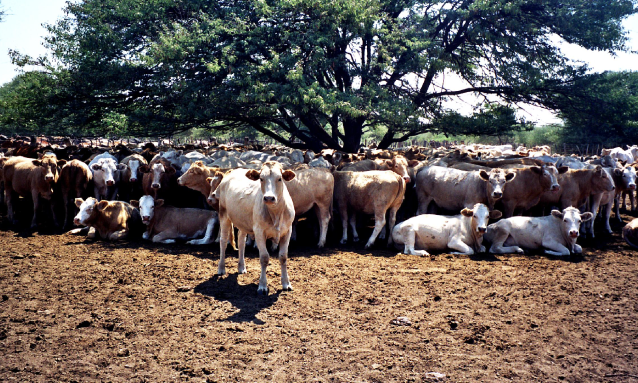
With 10,000 head of premium cattle grazing across 70,000 hectares, the Lemckes aren’t just ranchers; they’re architects of Botswana’s beef supremacy.
This isn’t just down to luck, it’s precision ranching. Every animal is a data point:
- 90%+ calving success rate (an industry gold standard)
- Calves weaning at 267kg by eight months.
- Strategic breeding of Brahmans, Simmentals, and Droughtmasters for drought resilience and premium beef
The patriarch, Rudi Lemcke, runs the operation with military discipline and a biologist’s eye.
His estimated P200 million net worth reflects not just land and livestock, but decades of genetic mastery and sustainable land management. Son Hugo Lemcke is modernising the legacy through solar-powered boreholes to ensure water security, employs rotational grazing to combat desertification, and leverages Tau Grading, his civil engineering firm, linking agriculture to infrastructure.
Rudi and his son Hugo, own six stud farms consisting of 1 000 Brahman, 700 Simmental, 350 Simbra, 300 Droughtmaster, 100 Charolais and 80 Braunvieh cows. They also farm with 7 000 commercial cows.
As the farming operation continues to grow, they purchased another 11 000 hectares northwest of Ghanzi.
Solar power for everything
The farming operation relies on solar power, as it is not connected to the national power grid, even though power lines are within reach. Apart from farms that were recently acquired, all cattle posts have solar power stations. Installing them has taken many years. There are also generators at the cattle posts to drive water pumps when the sun is not shining. The water was initially pumped with diesel engines that cost R26 400 at the time (R48 700 today). Diesel cost R8,35/litre at the time (now R22,25).
According to the Lemckes’ calculations, the borehole solar systems paid for themselves within eight months. Each borehole has solar panels and some also have solar pumps that pump the water to other cattle posts.
A patriotic Motswana whose globetrotting continues to show him how good Botswana is as a country, Rudi says he is thankful to the government of Botswana continues to give its citizenry opportunities in the farming sector.
“The Governments’ open door policy where you can access your leaders is unmatched all over the world.” – Rudi Lemcke.
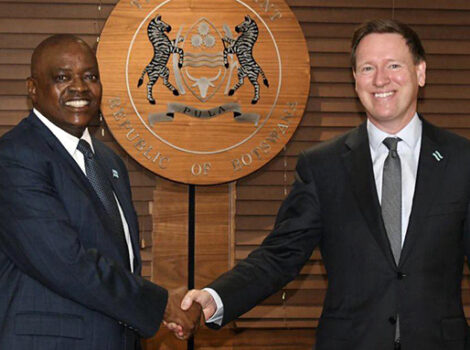
Rudi recently received Botswana’s Presidential Award of Honour. It is awarded every five years to a citizen who has made an exceptional contribution to the social and economic fields. Rudi is believed to be the first farmer to receive this honour.
The Presidential Award of Honour(a first for a Botswana farmer) and international acclaim (including features at the Houston Livestock Show) cement the Lemckes’ status as Africa’s beef elite.
He explains that many African farmers live hand-to-mouth and need to get good prices for their animals to survive. Governments and leaders in the livestock industry should therefore strive for an industry that ensures the smallest farmers can farm sustainably. This requires sufficient competition in markets, with enough abattoirs and buyers for their cattle.
Honoured for community work
The Lemckes provide permanent jobs for 400-500 people on their farms and businesses in Ghanzi. This excludes their businesses in Gaborone and other areas. However, there are 2 000 unemployed people in the village of D’kar near the farm where Hugo lives.
“We realised we needed to invest in D’kar to gain the goodwill of the residents and avoid friction. We provided them with solar power and water and help uplift them by encouraging them to form dance, soccer and cultural groups.
“We build houses for the elderly, donate blankets in winter and provide game meat for the annual independence celebrations. In terms of education, we offer scholarships for children to attend school and university, support schools and donate equipment to high schools.”
The Lemckes pour profits back into Ghanzi; upgrading roads, training young farmers, and proving cattle rearing can be the driver of Botswana’s economy.
Rudi was quoted saying;
“It will be my biggest achievement if I can grow young farmers to be master farmers.”
In a world where agriculture is often dismissed as “old economy,” the Lemckes have built a blueprint for blending tradition with innovation. Their story isn’t just about steak, it’s about how vision, discipline, and respect for the land can transform an entire industry.
Sources: The North West Mail via Facebook
Article by Kevin Tiro – https://shorturl.at/O4fY0