
24 March 2026
Botswana has been in a frenzy in recent weeks as religious and traditional fundamentalists sought to dangerously conflate religion with constitutional law, as though the two are interchangeable. They are not. One is a private matter of belief between you and God, while the other is the framework that protects and governs us all. When these two systems get fused, the result is rarely justice. It results in discrimination.
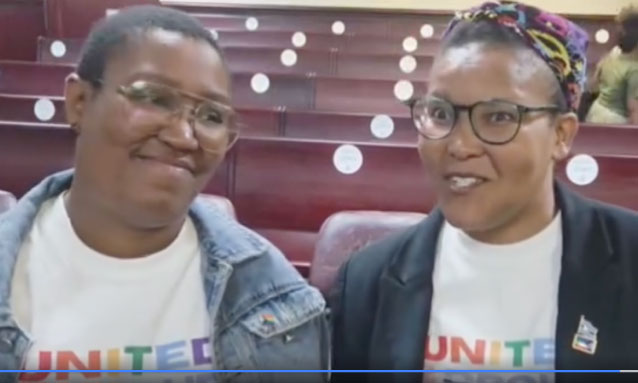
The ongoing case brought by same-sex couple Bonolo Selelo and Tsholofelo Kumile, challenging provisions of the Botswana Marriage Act, has reignited a familiar debate in the country. Some commentators insist that marriage equality violates religious values and therefore should not be recognised by law. It is a predictable argument. It is also fundamentally incompatible with constitutional governance.
Botswana is not a Christian state. It is a constitutional democracy governed by the Constitution of Botswana. That distinction matters. In a constitutional democracy, laws are interpreted in accordance with constitutional principles such as equality, dignity, protection, inclusion and the rule of law, rather than the doctrinal beliefs of any particular religion.
Religion has no place in constitutional law and democracy
The central problem with religious arguments in constitutional disputes is simple in that they divide, they contest equality and they are personal. Constitutional law, by contrast, must apply equally to everyone.
Botswana’s Constitution guarantees fundamental rights and freedoms under Sections 3 and 15, including protection from discrimination and the right to equal protection of the law.
These provisions are not conditional on religious approval. They exist precisely to protect minorities from the preferences or prejudices of the majority.
Legal experts, such as Anneke Meerkotter, in her policy brief In Defence of Constitutional Morality, point out that constitutional rights function as a safeguard against majoritarian morality. If rights depended on whether the majority approved of a minority’s identity or relationships, they would not be rights at all. They would merely be privileges.
This principle has already been affirmed in Botswana’s jurisprudence. In the landmark decision of Letsweletse Motshidiemang v Attorney General, the High Court held that criminalising consensual same-sex relations violated constitutional protections of liberty, dignity, privacy and equality.
This judgment noted that constitutional interpretation must evolve with society and must be guided by human dignity and equality.
The Court emphasised that the Constitution protects all citizens, including those whose identities, expressions or relationships may be unpopular.
That ruling was later upheld by the Court of Appeal of Botswana in 2021, reinforcing the principle that constitutional rights cannot be restricted on grounds of moral disapproval alone. These decisions were not theological pronouncements. They were legal determinations grounded in constitutional principles.
The danger of religious majoritarianism
When religion is used to justify legal restrictions, the result is what constitutional scholars call “majoritarian moralism.” It allows the dominant religious interpretation in society to dictate the rights of everyone else.
That approach is fundamentally incompatible with constitutional democracy. Botswana is religiously diverse. While Christianity is the majority faith, there are also Muslims, Hindus, traditional spiritual communities, Sikhs, and people who practice no religion at all.
If the law were to follow the doctrines of one religious group, which interpretation would it adopt?
Christianity alone contains dozens of denominations with different views on love, equality, marriage, sexuality and gender. The moment the state begins to legislate on the basis of religious doctrine, it implicitly privileges one belief system over others. That undermines both religious freedom and constitutional equality. Ironically, keeping religion separate from constitutional law is what protects religious freedom in the first place.
Judicial independence is the cornerstone of Botswana’s governance system
The current case involving Bonolo Selelo and Tsholofelo Kumile is before the judiciary, where it belongs. Courts exist to interpret the Constitution and determine whether legislation complies with constitutional rights. Political and religious lobbying, as well as public outrage, must not influence that process.
Judicial independence is the cornerstone of Botswana’s governance system. According to the International Commission of Jurists, judicial independence ensures that courts can make decisions based on law and evidence rather than political or social pressure.
When governments, political, religious or traditional actors attempt to interfere in constitutional litigation, they weaken the rule of law. Botswana has historically prided itself on having one of the most stable constitutional systems in Africa.
The judiciary has played a critical role in safeguarding rights and maintaining legal certainty. The decriminalisation case demonstrated this. Despite strong public debate and political sensitivity, the courts assessed the law according to constitutional principles rather than moral panic. The same standard must apply in the current marriage equality case.
*This article was first published in the Botswana Gazette, Midweek Sun and Botswana Guardian newspapers and has been edited for MambaOnline.
Bradley Fortuin is a consultant at the Southern Africa Litigation Centre and a social justice activist.
*This article first appeared at mambaonline.com on MAR 17, 2026