10 April 2026
France is setting its sights on Botswana for uranium deals months after losing access to Niger’s SOMAIR mine, where it held a 63.4% stake, as Europe scrambles to secure alternative nuclear fuel supplies.
- France is seeking uranium supplies from Botswana after losing access to resources in Niger due to a military coup and nationalisation of assets.
- Botswana, primarily known for diamonds, is aiming to diversify its mining sector and is estimated to have about 800,000 tonnes of uranium reserves.
- Orano was forced to shift focus after Niger’s government revoked cooperation, nationalised the SOMAIR mine, and accused France of exploiting its resources.
- This move comes amid heightened global competition for uranium as France and other nations seek new sources to support expanding nuclear energy strategies.
French nuclear group Orano has launched what industry sources describe as a discreet diplomatic push targeting Botswana’s uranium potential after losing access to assets in Niger. The move forms part of efforts to secure a new African supply portfolio following the nationalisation of the SOMAIR mine by Niger’s military government, where it held a 63.4% stake.
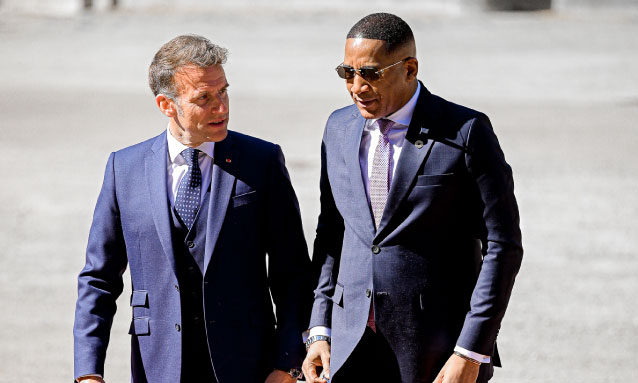
According to jeune afrique, senior Orano executives Xavier Saint Martin Tillet, head of the group’s Mining business unit, and Pierre Fourrier, Vice President for Strategy and Development, were part of a delegation that met Botswana’s president Duma Boko during his April visit to Paris.
The meeting, held on the sidelines of engagements organised by the MEDEF business federation, signals growing French interest in Botswana’s uranium potential as Orano seeks alternative African supply following its exit from Niger.
About 1,500 metric tons of uranium valued at roughly $270 million remained at the Somair mine at the time of reporting.
Botswana uranium potential draws interest
For its part, Botswana is seeking to diversify its mining sector beyond diamonds and is believed to hold uranium reserves estimated at about 800,000 tonnes, including the Letlhakane deposit, one of the largest undeveloped uranium resources globally.
According to Africa Intelligence, Botswana may have some of the largest uranium reserves in Africa, although significant obstacles remain to its ambition to produce yellowcake, the processed uranium used in nuclear fuel production.
Plans for Botswana’s first uranium mine have been discussed since 2009, but progress has remained slow.
More recently, the country has stepped up efforts to position itself as a potential uranium producer following weaker diamond sales and, since 2021, has sought nuclear-sector investment, including engagements in Vienna linked to the International Atomic Energy Agency.
Meanwhile, French nuclear fuel company Orano has reportedly applied for and received approval for uranium exploration licences covering roughly 15,000 square kilometres in the Ghanzi district of western Botswana, signalling growing interest in the country’s resource potential as Europe scrambles for nuclear fuel.
Niger takeover forces supply shift
France’s renewed focus on Botswana follows a breakdown in relations with Niger after the 2023 military coup. The ruling military junta in Niamey revoked cooperation agreements with France and nationalised the SOMAIR uranium mine, stripping Orano of its mining permit and operational control. The military government said the decision was taken after what it described as “irresponsible, illegal, and unfair behaviour” by the French state-owned company.
“Faced with the irresponsible, illegal, and unfair behaviour by Orano, a company owned by the French state, a state openly hostile toward Niger since July 26, 2023 … the government of Niger has decided, in full sovereignty, to nationalise Somair,” the junta said.
The military-led government also said decades of foreign operation of uranium mines brought “misery, pollution, rebellion, corruption and desolation” to Niger while largely enriching France. It added that uranium had been purchased at prices below market value despite powering a significant portion of French electricity.
According to Reuters, tensions escalated after a shipment of uranium concentrate left the Arlit mining site without Orano’s involvement. The company warned the transfer posed “serious safety and security risks”, while Niger said it had the “legitimate right” to sell uranium under market rules.
Global demand increases urgency
The search for alternative supply comes as France moves to strengthen nuclear fuel partnerships following disruptions to its uranium imports. At the second Nuclear Energy Summit in Paris, President Emmanuel Macron called for increased uranium exports from Kazakhstan to support Europe’s nuclear expansion strategy. The Central Asian nation is the world’s largest uranium producer, accounting for about 40% of global supply.
At the same time, Orano is expanding its Western supply chain after the U.S. Department of Energy announced a $2.7 billion programme to boost uranium enrichment capacity. The initiative includes $900 million awarded to Orano Federal Services, the U.S. subsidiary of France’s Orano, to help finance a new facility in Tennessee, increasing demand for reliable uranium feedstock.
Source: https://shorturl.at/KuqkQ