
3 November 2026
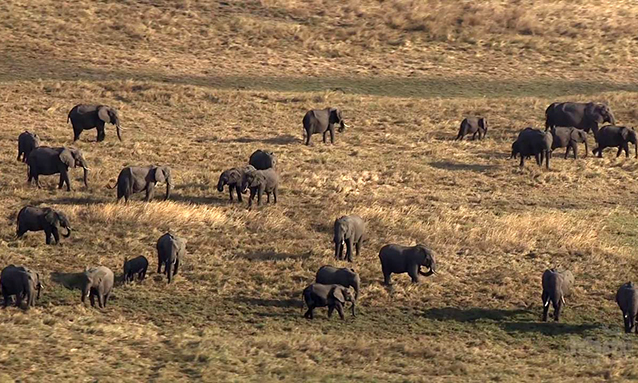
A new payments scheme rewards two rural communities on the edge of Botswana’s Okavango Delta for living alongside wildlife. Residents have installed cameras around their villages and earn money from photographs of elephants, lions and other wild animals that might raid vegetable gardens or kill livestock.
The scheme is part of the Harmony with Wildlife programme, run by conservation nonprofit Wild Impact and safari company &Beyond in partnership with Gogomoga and Tsutsubega, two remote villages with fewer than 500 residents each and no paved roads, schools, shops or electricity.
Okavango Delta is home to elephants, hippos and large predators, as well as about 130,000 people, including the Indigenous San communities.
Wild Impact’s CEO Andrew Venter told Mongabay in a video call that wildlife commonly enters villages. Elephants, for example, eat crops and damage water boreholes, which need to be heavily fenced, but the communities are “remarkably tolerant” of wildlife, Venter said.
In April 2024, rangers from the communities in the area, started helping residents document damage caused by wild animals so they could claim compensation for their losses from Botswana’s wildlife department. This sparked the idea of setting up camera traps to reveal when and where elephants and other large mammals go.
The communities then jointly worked with Wild Impact to deploy cameras in a way that didn’t interfere with peoples’ privacy. After two years of watching footage of wild animals roaming through the villages, Wild Impact recognised the need to acknowledge the community’s role in conservation and promote coexistence, Venter said.
That led to the development of an incentive model, he added.
Under the scheme, rangers check the cameras weekly and download the photographs. Different species attract different payments, with elephant sightings earning the most. Every three months, Wild Impact pays the money into an account held in the communities’ names and managed through the local council. Villagers decide collectively how to spend it.
This year, the programme has paid 57,600 Botswana pula (around $4,175) for wildlife sightings, mostly of elephants and spotted hyenas (Crocuta crocuta), although cameras have also photographed leopards (Panthera pardus pardus) and African wildcats.
Venter said the payments are deliberately modest because the organisation funds them itself rather than relying on donors, whose support may not last:
“We said, ‘Well, what could we realistically afford?’ Once we start this, this has to go on.”
Skipper Mareja, Wild Impact’s regional manager for Southern Africa landscapes, told Mongabay that payments for the first two quarters of 2026 have reached the communities’ accounts and the residents have met to discuss how to spend the money.
Dirk Cilliers, professor of conservation planning at South Africa’s North-West University, who isn’t involved in the project, said he welcomes the financial scheme.
“If we expect these communities to accommodate wildlife, there needs to be some tangible benefit for them which this programme offers,” he told Mongabay by email.
By Anna Weekes
Source: https://shorturl.at/g6xB8

