
30 September 2026
- Botswana cut its projected 2026 budget deficit to 3.1% of GDP from an earlier forecast of 8.9%, yet Moody’s still downgraded its sovereign rating from Baa1 to Baa2.
- The country’s prudent fiscal management has cushioned the impact of weaker diamond revenues, but it has failed to reduce Botswana’s dependence on the diamond sector.
- Unemployment reached 27.6% overall and 38.2% among young people in early 2024, underscoring the economy’s limited capacity to generate jobs beyond the mining industry.
Three days captured Botswana’s economic dilemma. On Tuesday, September 22, Gaborone announced that it had reduced its budget deficit to 3.1% of GDP, down from the 8.9% forecast only months earlier. However, on Friday, September 25, Moody’s downgraded Botswana’s sovereign credit rating from Baa1 to Baa2, marking the country’s second downgrade in less than a year.
These developments do not contradict each other. Botswana can continue to manage its public finances effectively while its economic model weakens. The latest developments illustrate precisely that point.
For decades, Botswana distinguished itself from many resource-dependent African economies. The country consistently ranked among Africa’s strongest performers in governance. Authorities managed diamond revenues more effectively than many peers, kept public debt under control, and maintained institutions that enjoyed uncommon credibility.
However, this success also concealed a deeper structural weakness. Efficiently managing resource wealth did not prepare the economy to function without it.
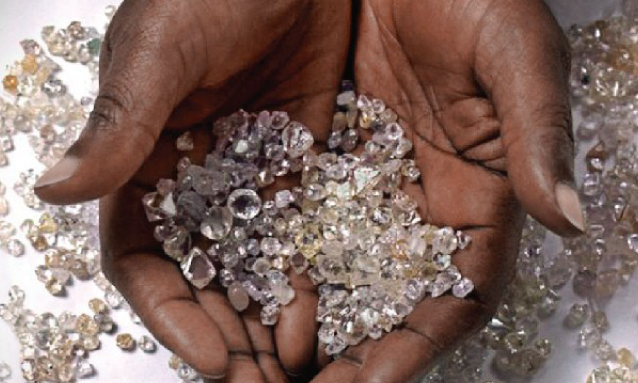
Botswana now faces the consequences of that dependence. Diamond revenues continue to decline, inventories continue to build, and synthetic diamonds continue to reduce visibility in a market that still supports a significant share of government revenue and foreign exchange reserves. Moreover, this year’s fiscal improvement relies largely on one-off measures and spending cuts rather than on new sources of revenue.
Strong governance continues to provide important safeguards. It allows Botswana to absorb the current shock, avoid the debt crises that have affected several other African economies, preserve its investment-grade credit rating, and gain additional time. However, time does not constitute a diversification strategy. The figure that should cause the greatest concern is not Moody’s downgrade.
By early 2024, before the current downturn had fully unfolded, Botswana’s unemployment rate had already reached 27.6% of the labor force. Youth unemployment stood even higher at 38.2%. These figures show that the economy failed to create enough jobs outside the diamond sector even when diamond revenues remained stronger.
This shortcoming represents Botswana’s main strategic mistake. The country pursued economic diversification too slowly during the years when resource revenues could have financed that transition with relatively limited costs.
As a result, Botswana has learned that a country can manage resource wealth efficiently without adequately preparing its economy to survive after that wealth declines.
The lesson extends far beyond Botswana. African countries that currently rely on oil, natural gas, lithium, or other mineral resources face a broader challenge. They must decide not only how to manage today’s resource windfall more effectively but also what economic foundations will remain once that windfall loses importance.
A well-managed resource windfall can protect a country. However, it does not automatically build the economy that follows.
This article was initially published in French by Fiacre E. Kakpo
Adapted in English by Ange J.A de Berry Quenum
Source: https://shorturl.at/3mvKW