10 July 2026
A pioneering veterinary outreach mission in one of Botswana’s most remote regions has provided vital treatment to 94 horses, 82 donkeys and hundreds of other animals during the first organised veterinary clinics in the eastern Okavango Delta.
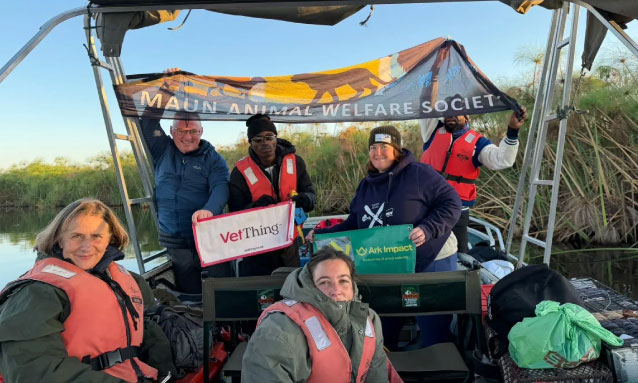
Volunteer veterinary surgeons Wendy Furness and Michael Colgan travelled from the UK to join the Maun Animal Welfare Society (MAWS) team in delivering care to isolated communities in the Seronga region, where access to routine veterinary services is extremely limited.
During the week-long initiative, the team treated a total of 755 animals, including 94 horses, 82 donkeys, 561 dogs and 18 cats. As well as vaccinations, parasite control and treatment for a range of medical conditions, dedicated equine clinics offered healthcare and welfare advice for working horses and donkeys, which play an important role in local livelihoods.
The cases encountered were wide-ranging. Among the more unusual patients was a horse recovering from a crocodile attack, alongside animals suffering from severe eye injuries and other trauma.
The veterinary team travelled more than six hours over rough roads before continuing by boat to reach some villages, setting up temporary clinics in areas where animal owners have little or no access to veterinary care. The overwhelming turnout highlighted the demand for services and the importance of preventative healthcare, including rabies vaccination programmes.
Wendy Furness said;
“This was the third time we have volunteered with MAWS, and it was by far the most logistically challenging project we have undertaken. Once we reached the villages, there was no possibility of returning for forgotten equipment, so every aspect of the clinics had to be meticulously planned by Carmen and Vasco.
“In addition, the local team from conservation charity Communities Living Among Wildlife Sustainably (CLAWS) had put in a lot of work in advance on the ground to ensure we could work alongside them, and that the people from the villages we were visiting were able to make the most of what we had to offer.
“Cases were rich and varied – from straightforward rabies vaccinations to more unusual cases such as a horse that had been attacked by a crocodile, severe eye injuries and a kitten that had been attacked by a monitor lizard. Many of the routine operations are more complicated than normal as tick borne disease increases the risks of bleeding. All part of a day’s work in such a remote location without access to regular vet care, often with an impromptu audience.”
MAWS says the success of the project has helped demonstrate strong demand for future veterinary outreach work in the region.
Source: https://shorturl.at/4XLZ8