
26 February 2026
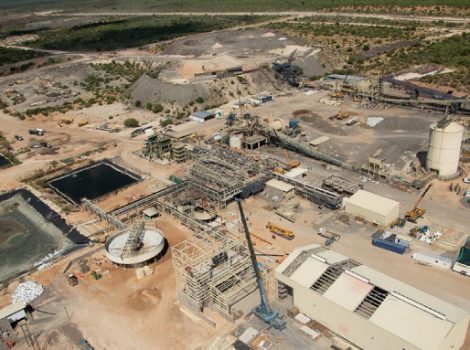
Canadian mineral exploration company Tsodilo Resources Limited has confirmed a significant rare earth and critical minerals discovery in Botswana, positioning Canada within an intensifying global competition led by the United States and China to secure strategic supply chains.
- Tsodilo Resources confirmed a major rare earth and critical minerals discovery in north-west Botswana, boosting Canada’s stake in the global supply race.
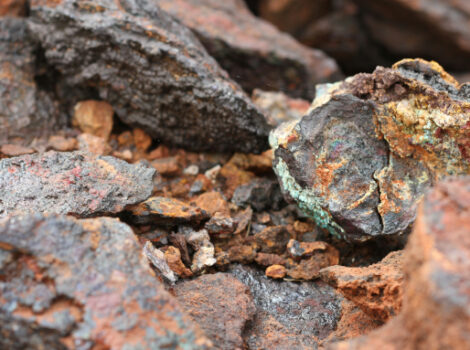
- The high-grade deposit, found at the Gchwihaba Metals project, contains all 15 US-listed rare earth elements plus copper, cobalt, nickel, vanadium, and silver.
- This discovery supports Western efforts to diversify mineral supply chains away from China and highlights Botswana’s strategic mining role.
- Botswana’s government has prioritised critical mineral exploration to diversify its economy beyond diamonds and attract foreign investment.
The discovery at the company’s Gchwihaba Metals project near Shakawe comes as Western governments seek to reduce dependence on Chinese rare earth processing, while Beijing continues to consolidate its dominance in the sector.
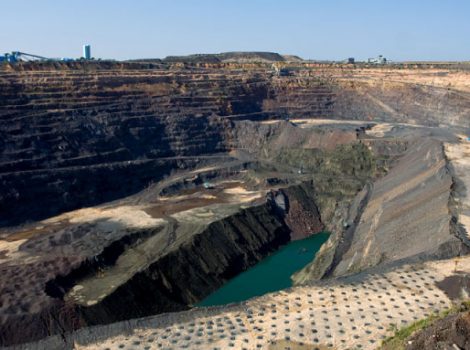
The find follows systematic exploration of the C26 and C27 targets and confirms a high-grade polymetallic system located between 20 and 50 metres below the surface, a depth that could support commercial extraction if further studies prove viable.
Tsodilo said the deposits contain 15 rare earth elements along with five other critical minerals; copper, cobalt, nickel, vanadium and silver.
Technical analysis shows the C26 and C27 skarns contain all 15 rare earth elements listed on the U.S. Geological Survey’s 2025 Critical Minerals List.
“The targets were originally identified as geophysical anomalies through ground magnetic and gravity surveys. Subsequent diamond core drilling has confirmed that these anomalies host skarn-type mineralisation containing an extensive suite of minerals,” the company said.
Strategic importance for Botswana
Rare earth elements are essential in the production of electric vehicles, wind turbines, battery storage systems, defence electronics and advanced telecommunications infrastructure. Demand has surged as countries accelerate energy transition and industrial modernisation efforts.
Botswana has traditionally been known for diamonds, largely through its long-standing partnership with De Beers Group. However, recent years have seen increased focus on diversifying the country’s mining sector.
According to the Botswana Chamber of Mines, the government has prioritised exploration for base metals, coal and critical minerals as part of efforts to reduce reliance on diamonds and attract new foreign investment.
This strategy is particularly significant given that Botswana is widely regarded as one of Africa’s most mining-friendly jurisdictions, offering established infrastructure, a clear regulatory framework and a strong record of partnership between government and the private sector.
The high-grade deposit, found at the Gchwihaba Metals project, contains all 15 US-listed rare earth elements plus copper, cobalt, nickel, vanadium, and silver.
Growing global competition
The announcement comes amid rising global competition for secure rare earth supplies. China dominates global rare earth processing through companies such as China Northern Rare Earth Group, a position Western governments increasingly view as a strategic vulnerability. The United States and European Union have introduced policies aimed at diversifying critical mineral supply chains and encouraging sourcing from stable jurisdictions.
African countries including Namibia, Tanzania and DR Congo have drawn heightened interest from Western and Chinese firms seeking exploration rights and long-term offtake agreements. The International Energy Agency has said demand for key critical minerals could more than double by 2030 under current energy transition policies.
For Botswana, a commercially viable rare earth development would broaden the country’s export base and reinforce its position within global supply chains tied to clean energy, advanced manufacturing and defence technologies.
Tsodilo said it will advance exploration to further define the extent of the mineralisation, while continuing engagement with local authorities and host communities. Any future development would remain subject to environmental impact assessments and regulatory approvals.
About the author: OLAMILEKAN OKEBIORUN
Olamilekan is a business journalist covering markets, technology, and changing landscape of African economies for Business Insider Africa. He writes with a focus on how innovation, policy, and entrepreneurship are shaping opportunities across the continent
Source: https://shorturl.at/Q8Ut1