8 February 2026
Concrete signs are emerging that the country is successfully navigating the process of turning around the economy as government introduces rigour and discipline to fiscal policy.
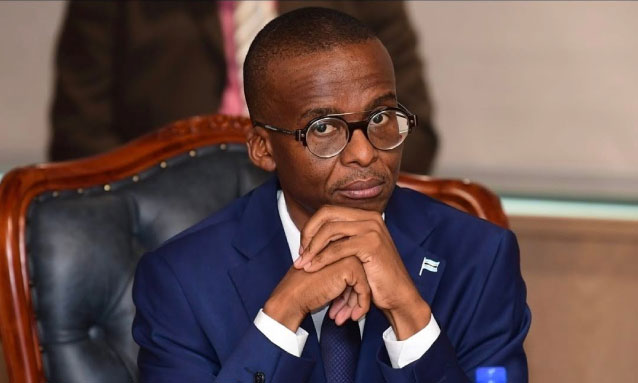
Addressing Members of Parliament during the 2026/2027 Pre-Budget Seminar recently, Acting President and Minister of Finance, Ndaba Gaolathe noted that improving the business environment remained central to attracting investment and creating jobs while navigating an increasingly complex global landscape.
He thus urged legislators to ensure that public resources were used in ways that build the future rather than ‘mortgage it.’ He cited the Botswana Economic Transformation Programme and National Development Plan 12 as more than mere policy frameworks given that they signalled a deliberate shift in government’s approach to development.
“Where the old model assumed that government would identify opportunities, design solutions, fund projects and drive delivery, the new model is explicit,” said Gaolathe.
The acting President said the transformation of Botswana’s economy has become paramount in view of the fast-changing global economic environment, characterised by reciprocal trade tariffs, declining and volatile international commodity prices and a retreat from multilateral trading arrangements.
He said Botswana currently faces a structural, unavoidable and defining moment of transition. This shift is driven by the lapse of the previous economic model, which was anchored in diamonds as the dominant source of government revenue.
Consequently, he said the country is experiencing a significant decline in revenue inflows, resulting in liquidity challenges that threatened the financial stability and sustainability of government operations. Gaolathe cautioned that the country’s fiscal space is tightening and buffers are thinning, and leading to execution delays and a dramatically narrowed window for action.
“In the fiscal environment we face, it is no longer sufficient for spending to be well-intended. It must be affordable, implementable, and capable of delivering measurable outcomes.
If spending does not protect the vulnerable effectively, raise productivity, create jobs, unlock exports, or strengthen long-term stability, then it is not sustainable,” he said.
He noted that such reality should not alarm the nation but rather sober it as the situation calls for clarity, discipline and courage in decision-making. He emphasised the need to distinguish between what is desirable and what is sustainable versus what is popular and what is productive.
“That is the responsibility of leadership, and Parliament is at the heart of that responsibility,” he added.
He further encouraged the private sector to increasingly identify, invest and build, while government reforms an enabling environment, coordinated efforts, enforced discipline and safeguarded stability.
Source: https://shorturl.at/9c5c1