
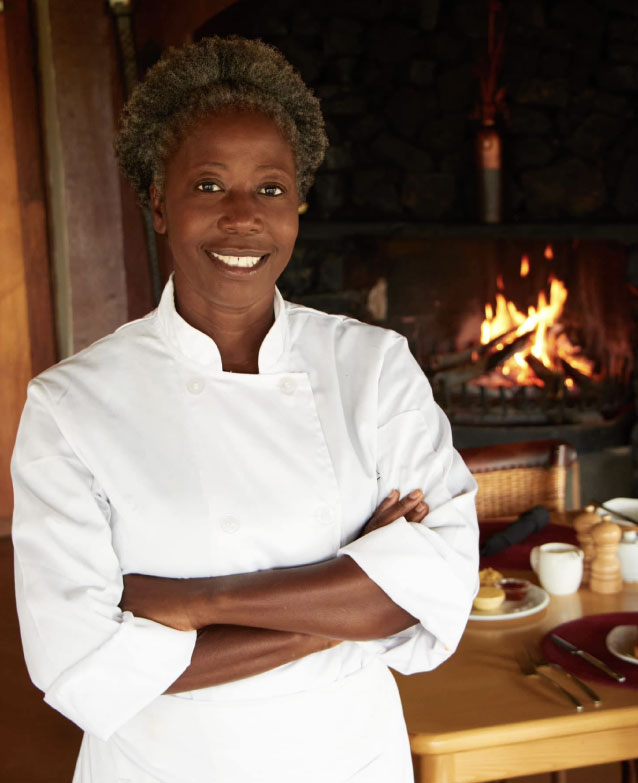
Meet Mahalapye born culinary enthusiast Ednah Rosen, a visionary woman dedicated to preserving the rich culinary heritage of Botswana through the revival of traditional Setswana food and an eco-village lifestyle rooted in sustainability, community and care.
The award-winning “cook extraordinaire” and author of Taste of Botswana is so passionate about sharing the rich tapestry of Botswana food that over the years, she has merged food and tourism to drive Botswana’s economic development.
In November 2024, Taste of Botswana was awarded the ‘Best African Cookbook of the World’ award at The Gourmand World Cookbook Awards that took place in Riyadh, Saudi Arabia as part of the Saudi Feast Food Festival. The ‘must not miss’ book includes a mix of traditional and modern recipes, showcasing Botswana’s food culture. It also features vibrant photographs and narratives to enhance the reader’s understanding of Botswana food and culture.
YourBotswana was honoured to sit down for a chat with Ednah to really drill down into what makes her tick.
Where it all began
I am from Mahalapye, a lively town full of character and stories. Growing up there, I was always surrounded by family, the smell of home-cooked meals and the everyday rhythm of life that sparked my love for food. It’s in Mahalapye, through simple, hearty meals and the traditions of Setswana culture, that my cooking journey really began.
The Swedish link – broadening culinary horizons
I spent three decades in Sweden, a chapter that was both challenging and transformative. While the cold winters and bustling city life were a stark contrast to the warmth of Botswana, they taught me resilience and broadened my culinary horizons. Yet, no matter how far I travelled, my heart always longed for the flavours and traditions of home.

YB: What sparked your interest in becoming a chef?
ER: My journey into the culinary world was ignited by a deep-seated love for the flavours of Botswana. As a child, I was a picky eater, much to my mother’s dismay. But her encouragement to explore cooking on my own kindled a passion that has only grown stronger with time. While living abroad, I realised the importance of preserving our culinary heritage, and that realisation propelled me to become a chef, to share the stories and flavours of Botswana with the world.
YB: Who are your biggest influences?
ER: My greatest influences are the women in my family, my mother, grandmothers, and aunts. They were the custodians of our culinary traditions, teaching me the art of cooking with love and respect for our ingredients.
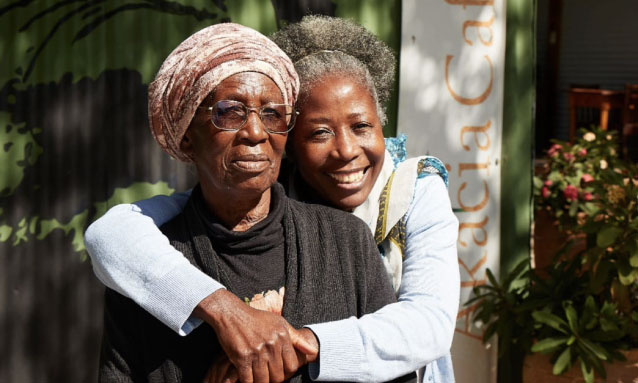
Additionally, chefs such as Marcus Samuelsson, who blend cultural heritage with innovation, inspire me to push the boundaries while staying true to my roots. Marcus is an Ethiopian-born Swedish-American celebrity chef, restaurateur and television personality who is currently the head chef of Red Rooster in Harlem, New York.
YB: How would you describe your overall cooking style?
ER: My cooking style is a fusion of tradition and innovation.
I honour the age-old techniques and flavours of Setswana cuisine, while infusing them with modern twists to make them accessible and exciting for today’s palate.
It’s about storytelling through food, each dish is a narrative, a memory, a piece of our culture.
YB: What are your signature dishes and what stories, if any, do they tell?
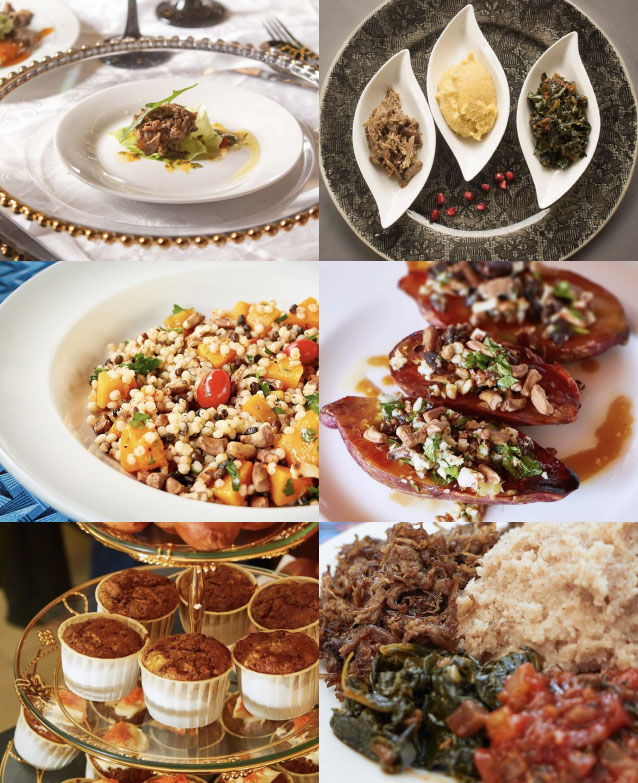
ER: Signature dishes including seswaa, magwinya, and phane (mophane worms) are more than meals, they are the stories of our ancestors, our land, and our traditions. Seswaa tells of communal gatherings and celebrations, magwinya evokes memories of tea time with family, and phane connects us to the earth and its bounty. Each dish carries the essence of Botswana, a testament to our rich culinary heritage.
YB: What inspires your creativity and new dish concepts?
ER: My creativity is fuelled by the landscapes of Botswana, the markets, the lush fields, and the diverse communities. I draw inspiration from our indigenous ingredients, like morula, morogo, and mabele, and reimagine them in contemporary settings. Travelling, meeting new people, and experiencing different cultures also spark new ideas, but I always strive to keep the essence of Botswana in every dish.

YB: What’s the most rewarding part of being a chef for you? And the most challenging?
ER: The most rewarding part is seeing people connect with our culture through food. When someone tastes a dish and says, “This reminds me of home,” it’s a profound moment.
The most challenging aspect is the constant balancing act between tradition and innovation, ensuring that in the pursuit of creativity, I don’t lose the authenticity that makes our cuisine unique.
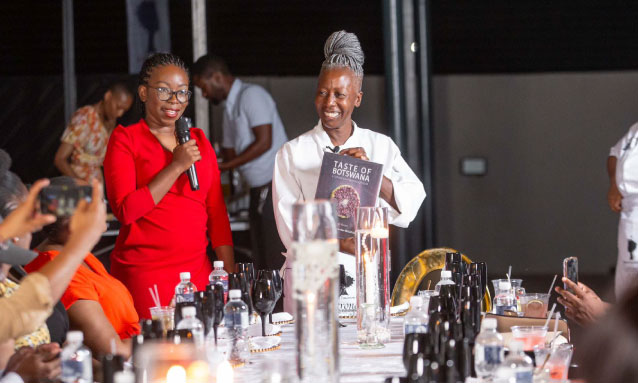
YB: You recently hosted a dinner party at the prestigious, newly-opened Grays Eden Boutique Lodge in Maun. How did that come about?
ER: The opportunity to host at Grays Eden was a beautiful convergence of my journey and my mission. It came about through a collaboration with Okavango Explorations aiming to showcase Setswana culinary traditions, and Maun provided the perfect backdrop to celebrate our traditions and share them with the world.
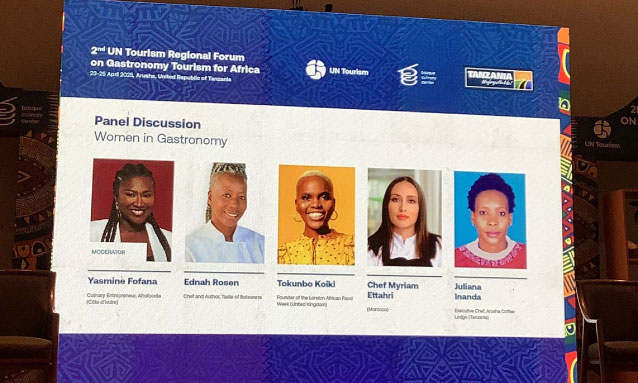
YB: Tell us more about the 2nd UN Tourism Regional Forum on Gastronomy Tourism for Africa that you recently attended in Tanzania at which you gave a speech.
ER: Attending the forum was an honour and a testament to the growing recognition of African cuisine on the global stage. Sharing Botswana’s culinary story with fellow chefs, policymakers, and tourism experts was a moment of pride. It reinforced my belief in the power of food to bridge cultures and promote sustainable tourism.
YB: You used to run a hugely popular eatery called Akacia Café in Maun that you sadly had to close down. From what we saw of it in pictures, we loved everything about it although we sadly never had the privilege of visiting it. Any plans to revive it somewhere else other than Maun?
ER: Akacia Café was a dream realised, a space where culture, community, and cuisine converged. While the physical café has closed, its spirit lives on in every dish I create and every story I share. As for revival, the idea is always in my heart. Perhaps in a new form, in a new place, but always with the same warmth and authenticity that Akacia embodied.
YB: A little birdie tells us Akacia Café offered a private, bespoke catering service. Do you still offer this service – if you do, how does it work, and how do people go about making a booking?
ER: Yes, I continue to offer bespoke catering services, crafting personalised menus that tell your story through food. Whether it’s an intimate gathering or a grand celebration, I work closely with clients to create an unforgettable culinary experience. Bookings can be made by reaching out to me directly through my website or social media platforms.
https://ednahrosen.com/#CONTACT
YB: Congratulations on your recently published cookbook titled Taste of Botswana. How’s that doing, and how can people get their hands on a copy?
ER: Thank you! “Taste of Botswana” has been a labour of love, and its success has been heartwarming. It’s available in hardcover and paperback through Amazon and local stores such as Exclusive Books, Botswana Craft, and Botswana Book Centre.

YB: And finally, what’s next for you, any exciting projects in the pipeline?
It’s early days, but I do have something exciting coming up. I don’t want to say too much so early on, but I’ll be venturing into the lucrative cultural experiences space, which is exploding in popularity. The synergy between my fusion culinary offer and cultural experiences is so exciting and undeniable, it wouldn’t make sense to not capitalise on it. I’m currently putting all my ducks in a row, so watch this space!
Words: YourBotswana writer